
Product Description
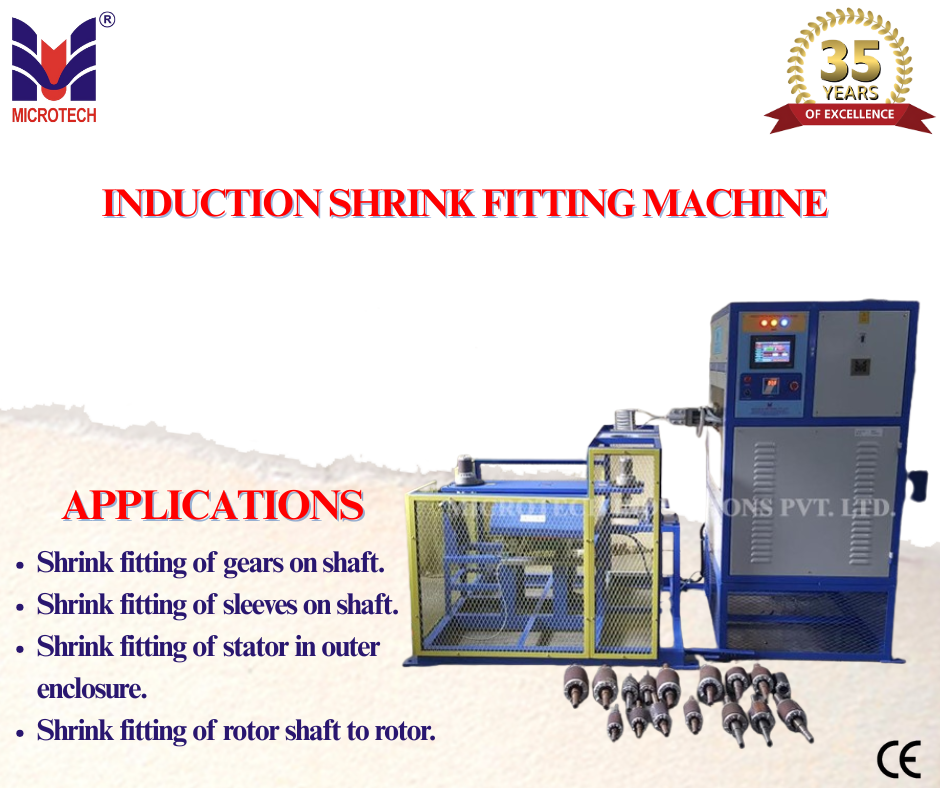
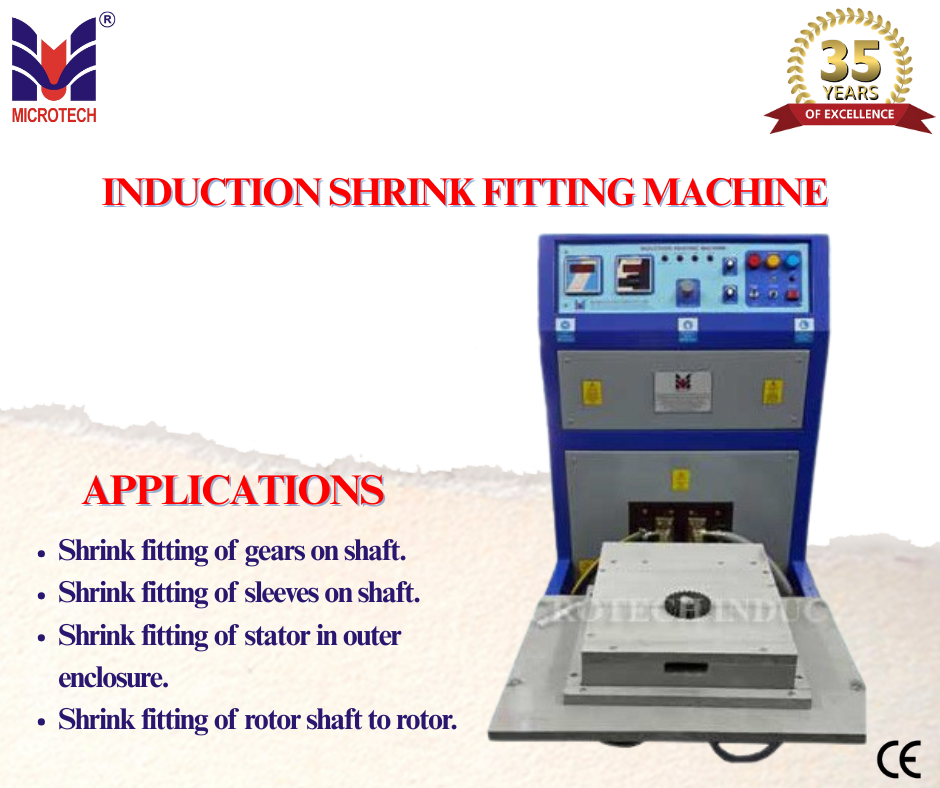
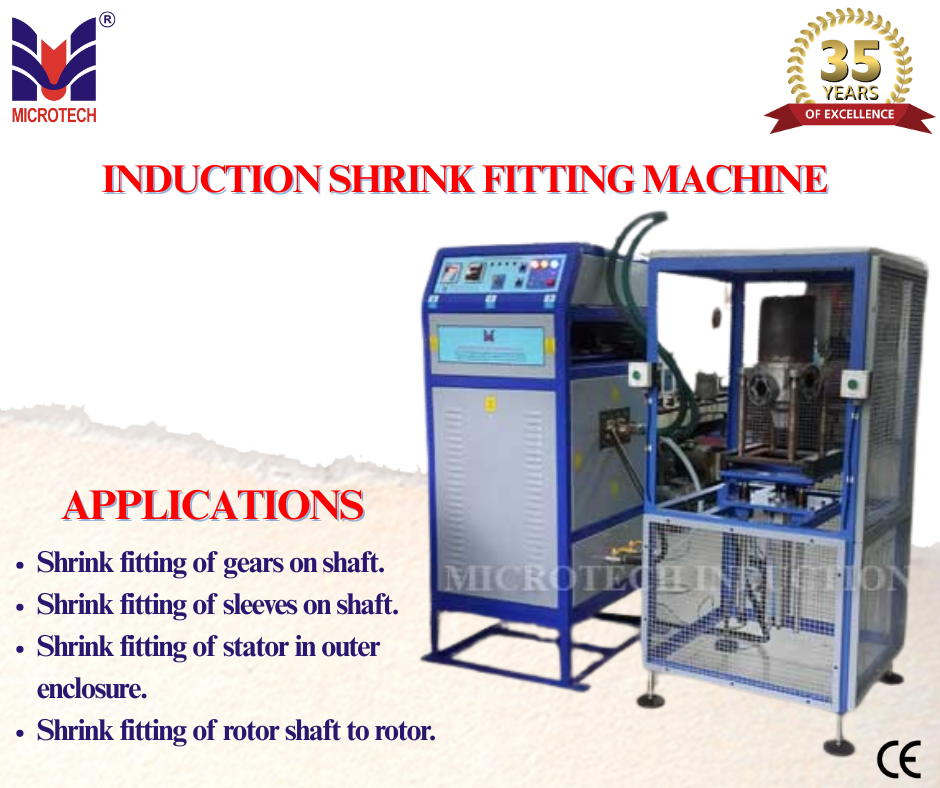
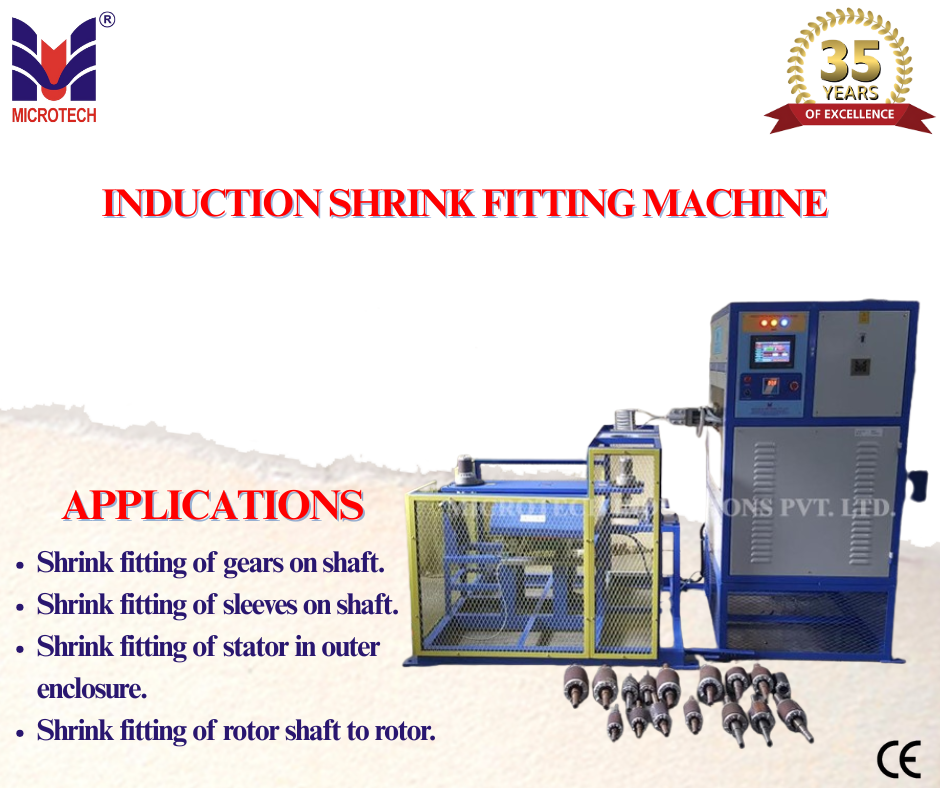
Microtechmake Induction Shrink Fitting helps to get a uniform heating with energy saving features.Also union / mechanical assemblies formed by Induction Shrink Fitting can also be dis-assembled by selective heating of the components.
Applications
- Shrink fitting of gears on shaft.
- Shrink fitting of sleeves on shaft.
- Shrink fitting of stator in outer enclosure.
- Shrink fitting of rotor shaft to rotor.
- Removal and re-fitting of a gas turbine impeller.
- Assembly of high precision roller bearings.
- Shrink fitting of 2- stroke crank shafts for ship engines.
-
Specifications
In our Endeavour to make better products, Microtech Induction India Pvt. Ltd. reserves the right to change any specifications at any moment and without prior notice, to the models (including programming) and their accessories.
-
| POWER RANGE | 1-5KW | 5-15KW. | 15-50KW | 50-200KW |
| FREQUENCY RANGE | 15-400kHz | 15-100kHz | 15-30kHz | 15-30kHz |
| ADAPTATION TO CHANGE LOAD CHARECTERISTICS | YES | YES | YES | YES |
| POWER CONTROL | AUTO | AUTO | AUTO | AUTO |
| LOAD SENSED SELF TUNING | YES | YES | YES | YES |
| SIZE (mm) | W-170 B-495 H-350 | W-530 B-640 H-1110 | W-620 B-725 H-1370 | W-1000 B-1090 H-1675 |
| INPUT POWER RANGE | SINGLE PHASE 230V/50Hz. | THREE PHASE 440V/50Hz | THREE PHASE 440V/50Hz | THREE PHASE 440V/50Hz |
Precise and Efficient Heating SolutionsThe Induction Shrink Fitting Machine employs advanced induction technology to deliver rapid, uniform heating. Its frequency range of 50 kHz to 300 kHz ensures precise temperature control, minimizing the risk of material distortion. This makes it suitable for critical industrial operations like forging, annealing, and shrink fitting, particularly with steel and cast iron components.
Ideal for Various Industrial ApplicationsEngineered to handle a broad spectrum of industrial processes, our machine seamlessly accommodates shrink fitting, localized heating, and forming tasks. The versatility, combined with robust power ratings, makes it invaluable for manufacturing sectors requiring reliable and persistent heating performance.
FAQ's of Induction Shrink Fitting Machine:
Q: How does the Induction Shrink Fitting Machine operate in industrial settings?
A: The machine uses electromagnetic induction to generate localized heat, allowing precise control over the heating process. This is particularly beneficial for shrink fitting, where components must be heated uniformly without physical contact, ensuring a tight and secure fit.
Q: What materials can the Induction Shrink Fitting Machine process effectively?
A: It is engineered to handle steel and cast iron, making it ideal for industries dealing with robust metal parts and requiring efficient heating, forging, or annealing operations.
Q: When should I use the induction process for shrink fitting applications?
A: Induction shrink fitting is recommended when you need accurate, repeatable, and quick heating with minimal risk of damaging the surrounding material. It is especially useful for high-precision assemblies or time-sensitive industrial projects.
Q: Where can this machine be installed within an industrial setting?
A: The machine is designed for flexibility and can be integrated into production lines, workshops, or standalone stations. It requires a stable electrical supply and should be placed where there is safe access for handling heated parts and efficient ventilation.
Q: What is the typical process for shrink fitting using this machine?
A: The process involves heating a metal component until it expands slightly, allowing it to fit over another part. Once cooled, the fitted component contracts and forms a secure, interference fit, enhancing assembly strength and precision.
Q: How does the frequency range benefit the machine's operation?
A: The broad frequency range of 50 kHz to 300 kHz allows for tailoring the heating depth and speed according to the specific requirements of the application, accommodating various workpiece sizes and material thicknesses.
Q: What are the key benefits of using this Induction Shrink Fitting Machine?
A: It delivers precise heating, energy efficiency, and reduced material stress. Its non-contact process ensures minimal contamination risk and faster cycle times, significantly increasing productivity in demanding industrial environments.