
Product Description
Shrink Fitting
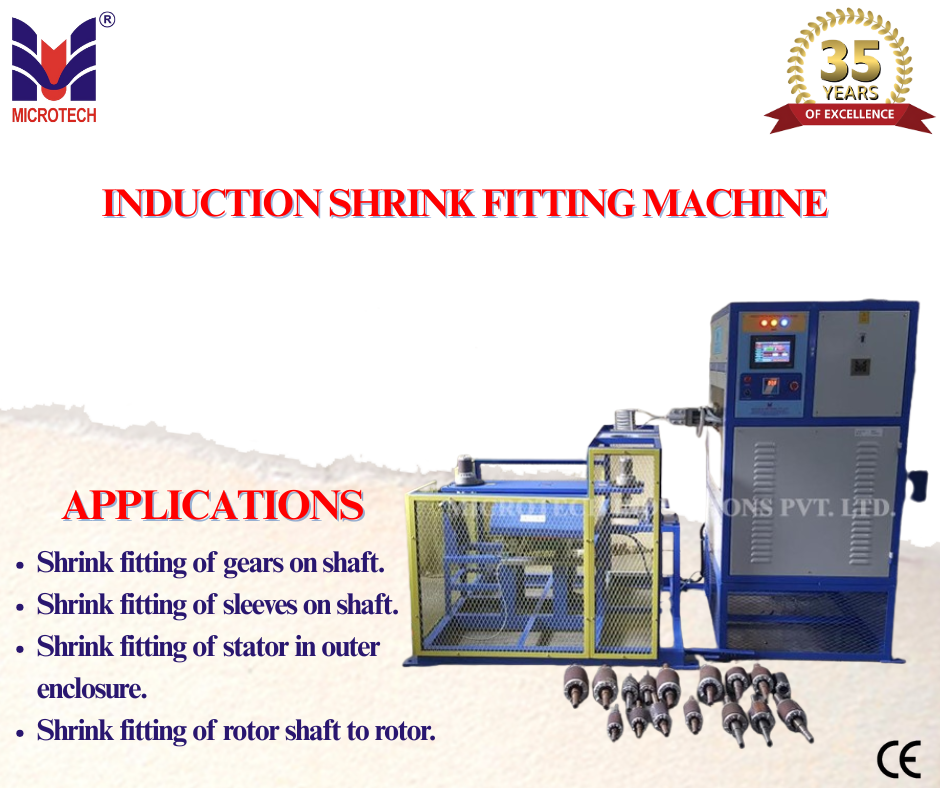
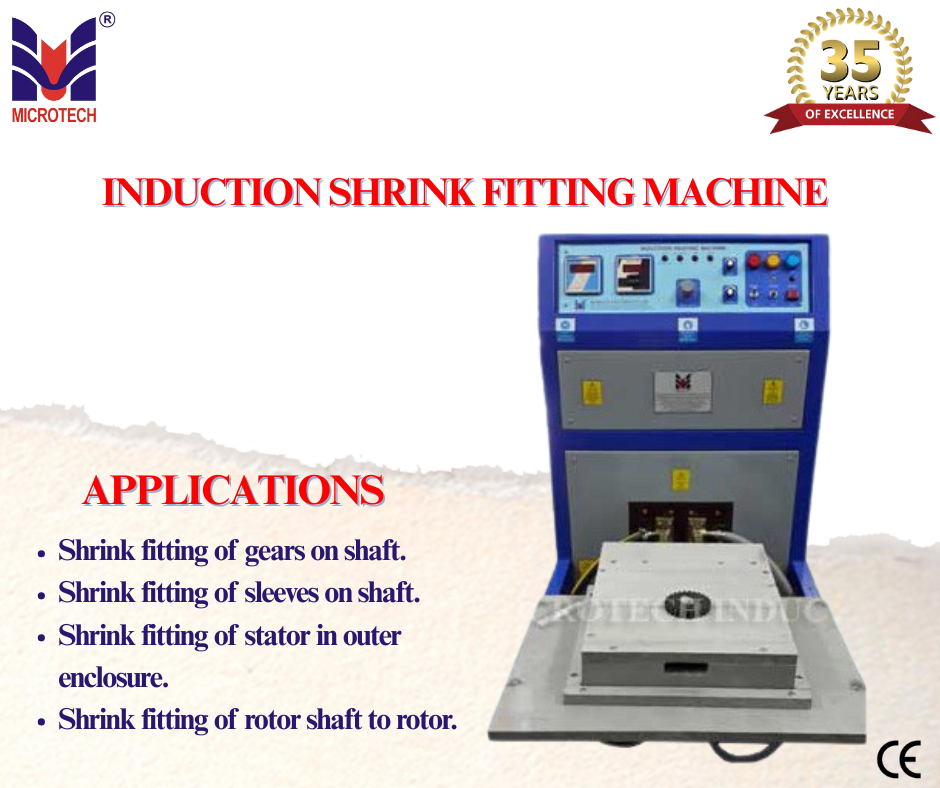
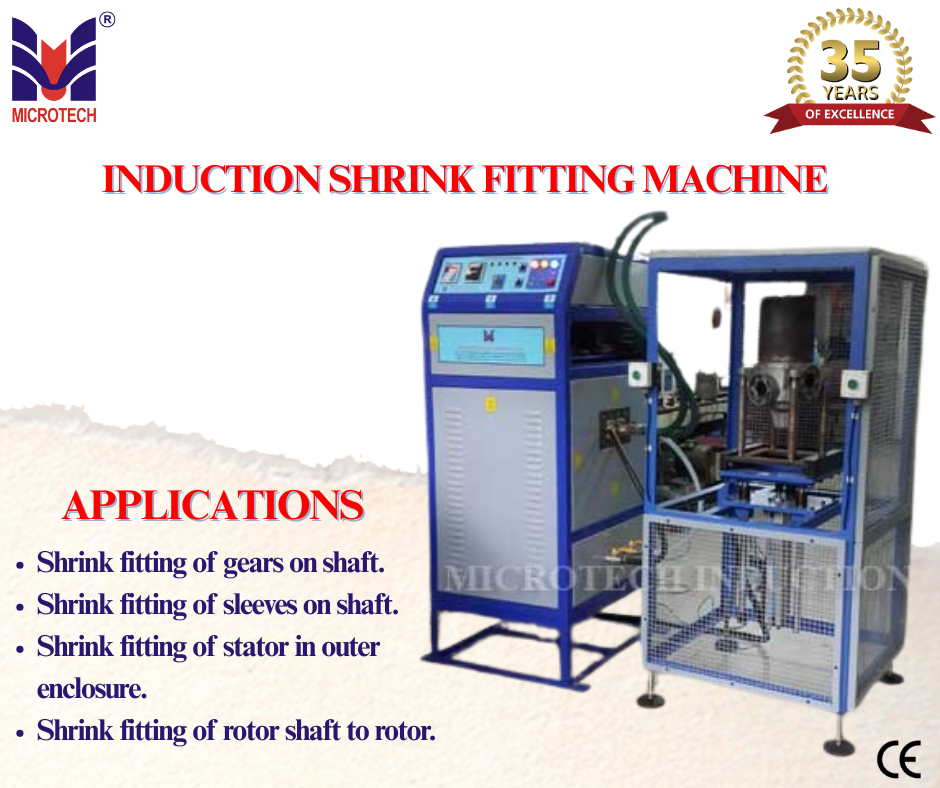
Induction Shrink Fitting is a process where a union is formed using the phenomenon of expansion during the heating of the material and contraction during the cooling of material. Induction Shrink Fitting is useful in forming the mechanical assemblies and delicate parts where mechanical pressure cannot be applied. Residual deformation and stress reduction, fast and repeatable process using the flameless technique, easy operating features and state of the art are the main advantages of Microtechs Induction Shrink Fitting Machines.
Also union / mechanical assemblies formed by Induction Shrink Fitting can also be dis-assembled by selective heating of the components. Microtech make Induction Shrink Fitting helps to get a uniform heating with energy saving features
Application ofInduction Shrink Fitting Machines:
- Shrink fitting of gears on shaft.
- Shrink fitting of sleeves on shaft.
- Shrink fitting of stator in outer enclosure.
- Shrink fitting of rotor shaft to rotor.
- Removal and re-fitting of a gas turbine impeller
- Assembly of high precision roller bearings
- Shrink fitting of 2- stroke crank shafts for ship engines.
Specifications:
| Power range | 1-5kw | 05-15kw. | 15-50kw | 50 -200kw |
| Frequency range | 15-400khz | 15-100 khz | 15-30 khz | 15 - 30 khz |
| Adaptation to change load charecteristics | Yes | Yes | Yes | Yes |
| Power control | Auto | Auto | Auto | Auto |
| Load sensed self tuning | yes | Yes | Yes | Yes |
| Size (mm) | W-170 b-495 h-350 | W-530 b-640 h-1110 | W-620 b-725 h-1370 | W-1000 b-1090 h-1675 |
| Input power range | Single phase 230v/50hz. | Three phase 440v/50hz | Three phase 440v/50hz | Three phase 440v/50hz |
Precision Engineering for Industrial ApplicationsOur Shrink Fitting Machine is crafted from premium steel and delivers consistent results for industrial assembly processes. The standard size and 50 Hertz frequency make it compatible with a wide range of mechanical parts, ensuring adaptability and enhanced workflow in diverse manufacturing setups.
Efficient and Reliable Assembly ProcessDesigned to optimize the shrink fitting method, this machine helps create a tight mechanical bond between parts. Its controlled heating mechanism allows for easy expansion of components, facilitating seamless insertion and subsequent cooling for a durable and secure fit.
FAQ's of Shrink Fitting Machine:
Q: How does a shrink fitting machine work in an industrial setting?
A: A shrink fitting machine heats metal parts, causing them to expand so another component can be fitted inside. As the heated part cools, it contracts, creating a strong, interference fit. This process is ideal for joining components such as gears and shafts in industrial machinery.
Q: What is the typical process for using the shrink fitting machine?
A: To use the shrink fitting machine, operators place the metal component into the machine, set the appropriate temperature, and heat the part until it expands. After quickly inserting the mating component, the assembly is allowed to cool, resulting in a firm fit.
Q: When is shrink fitting preferred over other assembly methods?
A: Shrink fitting is preferred when a secure, backlash-free connection is needed without the use of adhesives or mechanical fasteners. It is commonly used when high precision and durability are required in industrial equipment.
Q: Where can the shrink fitting machine be installed?
A: This standard-size shrink fitting machine can be installed in various industrial environments, including manufacturing plants, assembly lines, and workshops, provided there is access to a compatible power supply with a rated frequency of 50 Hz.
Q: What are the main materials compatible with this shrink fitting machine?
A: The machine is primarily constructed from durable steel and is compatible with other metals commonly used in industrial assemblies. Its heating mechanism is optimized for steel and similar alloys.
Q: How does using the shrink fitting machine benefit industrial operations?
A: Employing the shrink fitting machine increases assembly speed, enhances connection strength, and minimizes downtime. Its precision reduces the risk of part failure and supports consistent, high-quality manufacturing outcomes.